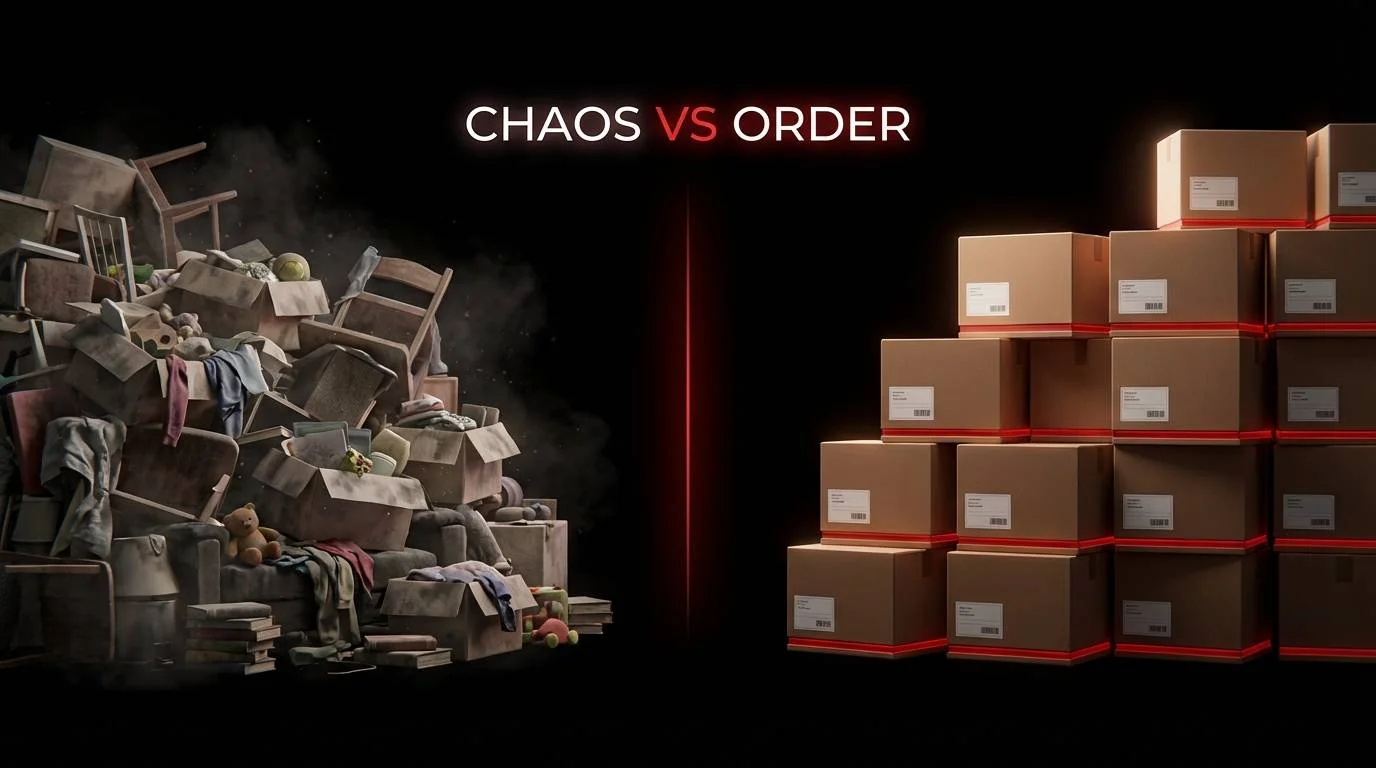
Moving has one great quality: it quickly shows you how many things in your life are truly necessary—and how many simply take up space in closets, boxes, and your head. And you don’t need any “Instagram minimalism” or self-denial for this. Minimalism before a move is a practical tool: the fewer unnecessary items you have, the fewer boxes you’ll need, the less work there is, the lower the risk, the lower the cost, and the faster you’ll settle in.
This article is about how to sort your belongings before moving—quickly and sensibly. No preaching. Just clear decisions.
Why it’s worth minimizing before you move
Most people think minimalism only saves space. In reality, it saves four things:
Time – less sorting, less packing, less carrying.
Money – a smaller volume often means a shorter job and fewer packing materials.
Nerves – when everything is clear, there’s less “where did I put it?” and “oh, I forgot.”
Quality – less unnecessary chaos, fewer chances to damage or lose something.
If you’re organizing your move with a team that works calmly and neatly, the whole process becomes easier: clear volume, clear priorities, clear decisions. If relevant, take a look at Moving services.
The main rule: decide before the box, not inside the box
The biggest mistake is starting to pack and only then asking yourself whether you need the item. That’s how old problems move into your new home: a bag of random cables, “maybe I’ll need it,” clothes with tags you never wore, and items you only see during a move for the first time in two years.
So the order is:
You take the item out.
You make the decision.
Only then do you pack it.
A fast method: 4 boxes and short sorting sessions
If you want to save time, use a simple system:
KEEP (goes to the new home)
DONATE/SELL (in good condition, valuable to someone else)
TRASH (broken, not worth fixing, no value)
NOT SURE (limited amount—come back later, but no more than one box per room)
Work 30 minutes, then take a 10-minute break. Moving is not a “until 3 a.m.” marathon. The more tired you are, the more “not sure” piles up—and the fewer real decisions you make.
What to keep? The 3-question filter
If you want to decide quickly, ask yourself three questions:
Have I used this in the last 12 months?
Would replacing it cost me more stress than money?
Does it have a real function—or is it only “I feel bad throwing it away”?
If the answer to #1 is “no,” to #2 is “no,” and to #3 is “just guilt,” the decision is clear. The item isn’t serving you.
Exception: seasonal and special-occasion items
It’s normal to keep things if they have a clear purpose: skis, Christmas decorations, a suit for events, winter tires, etc. Just keep them neatly and logically—not scattered all over the place.
What to get rid of first? 8 categories where “dead weight” usually collects
Clothes you don’t wear.
If you haven’t worn it in a year, chances are you won’t. Except for very specific items (a suit, uniform, sports gear).“I’ll fix it one day” items.
If you haven’t fixed it in 6 months, you probably won’t. During a move it only steals time.Cables, chargers, old boxes.
Keep only what you can identify. If you don’t know what it’s for—let it go.Kitchen overflow.
Most people need less than they think. 2–3 pots, one good pan, a decent knife, a few plates and cups. The rest is “just in case.”Half-used cosmetics and hygiene products.
Half-empty bottles are a classic moving problem. Sort it out so you’re not transporting trash.Papers and documents.
A separate topic. There are often truly important things mixed into a mess. Split them into: important / archive / destroy.Toys and kids’ items.
Kids grow fast. Donate or sell what’s too small, too childish, or simply no longer interesting. A child’s room should feel lighter after the move—not heavier.Furniture you think you might “make work.”
If it doesn’t fit the new space, it can be smarter to let it go. Moving costs money, and you don’t want to pay to transport something you won’t use.
What about belongings with sentimental value?
Family keepsakes, letters and children’s artwork can matter even if you do not use them every day. Moving does not mean you have to discard them. Set aside a separate box, protect fragile pieces and decide where you would like them to go in your new home.
If you are unsure, leave the decision for later. The day before a move is rarely the best time to decide what you want to keep for years.
When minimalism turns into “clearing out” (and what to do about it)
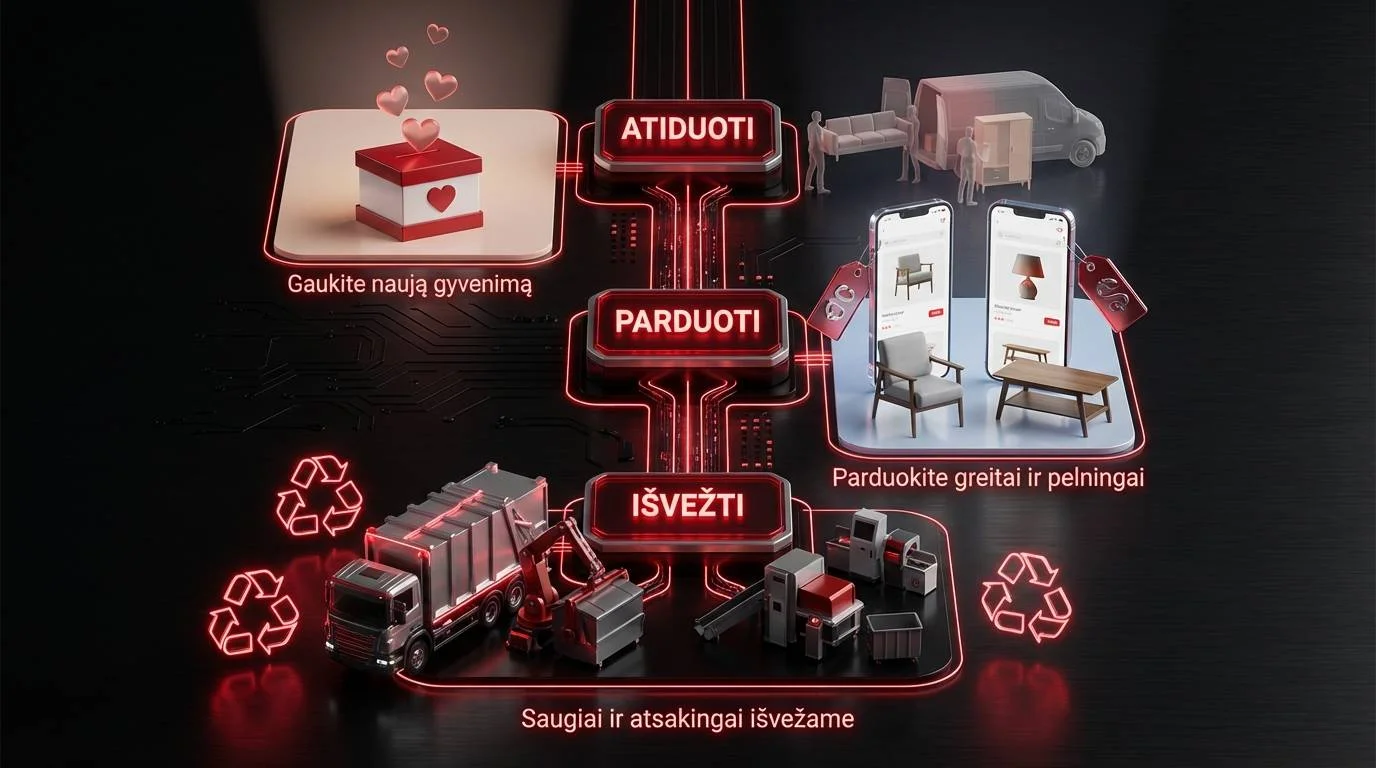
There’s a point where you’re no longer “donating”—you’re simply cleaning things out. Then you need a plan:
good items – donate / sell
old, broken, bulky items – remove and dispose of
If you have old furniture you’re not taking to the new home, it’s worth planning it in advance—because “the last day” turns it into chaos. In those cases, Old furniture removal helps.
And if items are no longer usable and need to be handled responsibly (recycling, waste management, disposal), the easiest option is to do it all in one go—this is what Disposal services are for.
How this connects to the moving process (and why it’s worth doing in advance)
When you sort your belongings before moving, everything becomes clearer: how many boxes there really are, whether you need extra hands, how long it will take, what needs extra care, and what can be transported more simply. That’s what allows a move to happen calmly and precisely.
In practice, it means:
fewer last-minute decisions
less unnecessary carrying
clearer logistics (what goes where, what first, what later)
less risk of damaging what’s actually valuable or fragile
Mini moving checklist (save this)
4 boxes: keep / donate / trash / not sure
One “first day” box (chargers, hygiene, important documents)
Documents sorted separately
Kitchen reviewed—only what you actually use remains
Clothes sorted
Kids’ items sorted
Sentimental items—one clear labeled box
Plan for packaging/waste (what you donate, what you remove, what you dispose of)