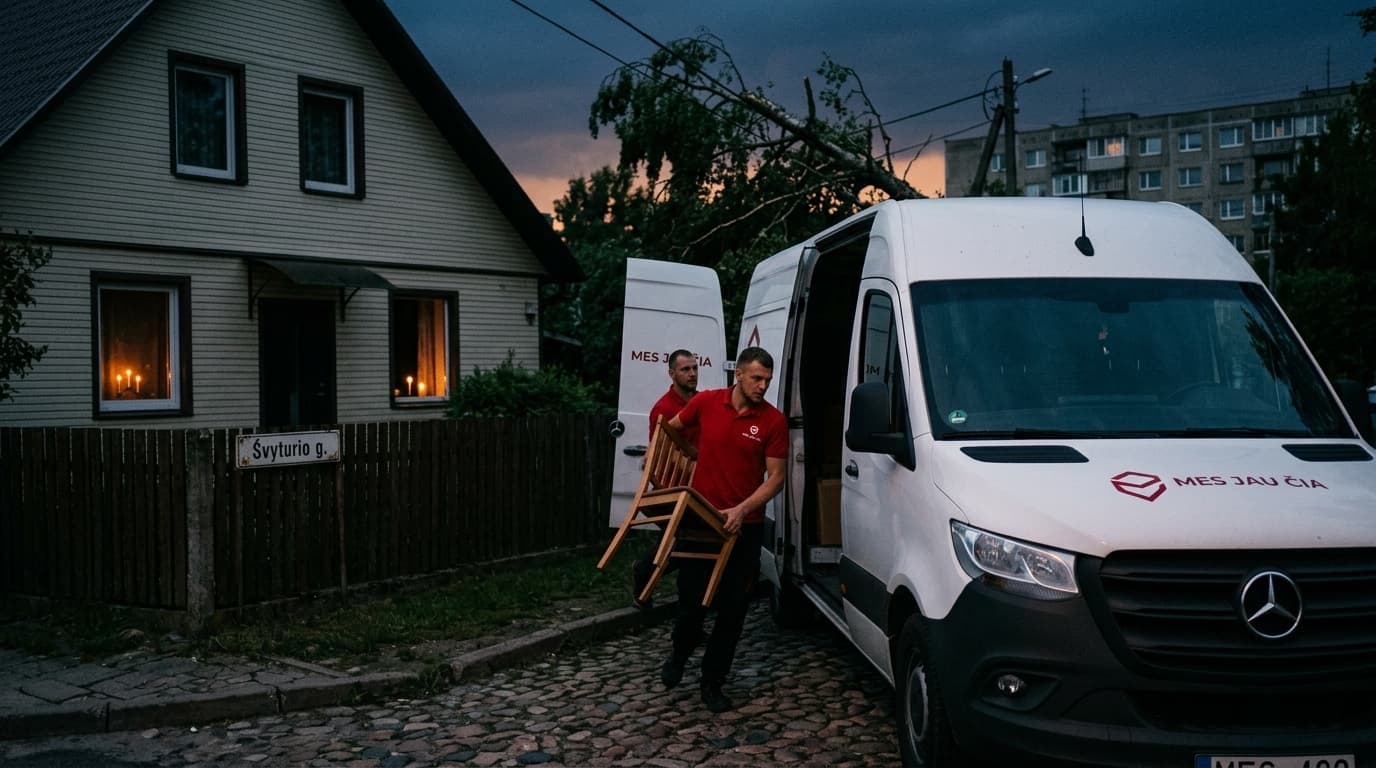
In the "Vakaras" garden community in Vilniaus district, a tree fell on power lines on 22 August at around 3 PM. ESO informed residents that supply would be restored by 27 August. Five days without electricity in summer means spoiled food, a non-working water pump, and dark evenings with no clear explanation of why repairs are taking so long.
In brief:
- After a severe storm in suburbs and garden communities, power restoration can take 3-5 days, as urban networks are given priority in the repair queue.
- After moving to a private house, dependence on electricity suddenly increases — not just the lights go out, but also heating and water from the well.
- A generator, an insulated food box, and 20-30 litres of drinking water reserves — the minimum kit that saves the day during the first 24 hours without power.
- If the power goes out on moving day itself, it's worth temporarily leaving some belongings in storage until the house is ready for living.
Why Power Restoration Takes Several Days in Vilnius District
The case described by 15min.lt is a good example of how a single fallen tree can leave hundreds of people without power for a week. Residents can see the problem themselves: a tree on the wires that would take an hour or two to remove. But in reality, repairs get pushed back to the fifth day, because dozens of other similar faults across the region need to be fixed first (source).
In more remote settlements and garden communities, repair crews have more difficulty accessing sites, wires often run through forests or gardens, and a single point serves fewer subscribers than an urban transformer station. This means that economically and logistically, such locations end up at the back of the repair queue.
ESO's priority logic is simple: restoration happens first where the largest number of people are left without power and where critical infrastructure is affected — hospitals, water supply stations, apartment block districts. A garden community with a few hundred houses, some used only in summer, ends up lower on this list, even if the cause of the fault is simple.
Who's Most at Risk: New Residents of Private Houses
In an apartment, a power outage usually just means a light switch that doesn't work and a silent fridge. In a private house, the situation is different — when the power goes out, the heating boiler, the water pump from the well or borehole, and sometimes even the sewage system (if it depends on an electric pump) all stop working simultaneously.
The most common mistake we see among people who've just moved from an apartment is that they simply don't realise the house can be left without both heat and water at the same time. In an apartment, such a situation is almost impossible, because centralised heating and water supply operate independently of the building's electricity. In a private house, it's completely different.
If you've just completed a move to a private house, it's worth checking a few things in the first week: whether the boiler works without electricity (gas with manual ignition, or only electronic control), whether there's an alternative water source, and whether you know where the electrical panel is in the house and how to safely disconnect it during a storm.
Generators: When You Really Need One and How to Choose
What Power You Need
A 1-2 kW generator is enough for a fridge and a few lighting fixtures. If you also want to run a water pump (usually needing up to 3 kW at startup, with 0.75-1.5 kW during normal operation), it's worth choosing a 3-3.5 kW model. The circulation pump for a heating boiler additionally requires around 100-200 W.
Petrol, Diesel, or Inverter
| Type | When It's Suitable | Price (approximate) |
|---|---|---|
| Petrol | Short-term use, rare outages | €200-500 |
| Diesel | Frequent or long-term use, higher loads | €500-1500 |
| Inverter | Sensitive electronics (boiler controls, computers) | €350-900 |
Safety
A generator should never be placed in a garage or basement without proper ventilation — carbon monoxide has no smell and can't be seen, and poisoning can be fatal within hours. Keep it outdoors, at least 3-5 metres away from windows and doors.
For those who don't need a permanent generator, an alternative is a power station with a battery system. Such a device can quietly power a fridge, charge phones, and run a few LED lamps for 8-12 hours, but it won't solve the problem if the power is out for several days.
Storing Food Without Electricity: What to Do With the Fridge and Freezer
A closed fridge maintains its temperature for about 4 hours if the door isn't opened. A full freezer keeps its cold for up to 48 hours, while a half-empty one lasts only about 24 hours.
- Place ice packs or bottles of water in the freezer in advance — they act as extra cold storage.
- In winter, outdoor snow can temporarily replace a freezer — place food in sealed bags in a snow pile in a shaded area.
- Use an insulated cooler with ice packs for perishable items — milk, meat, eggs.
If the fridge has been without power for more than 4 hours and the food has reached 5-8°C, it's better not to take the risk and to avoid eating meat and dairy products. Food poisoning in summer, when clean water is already scarce, can complicate the situation even further.
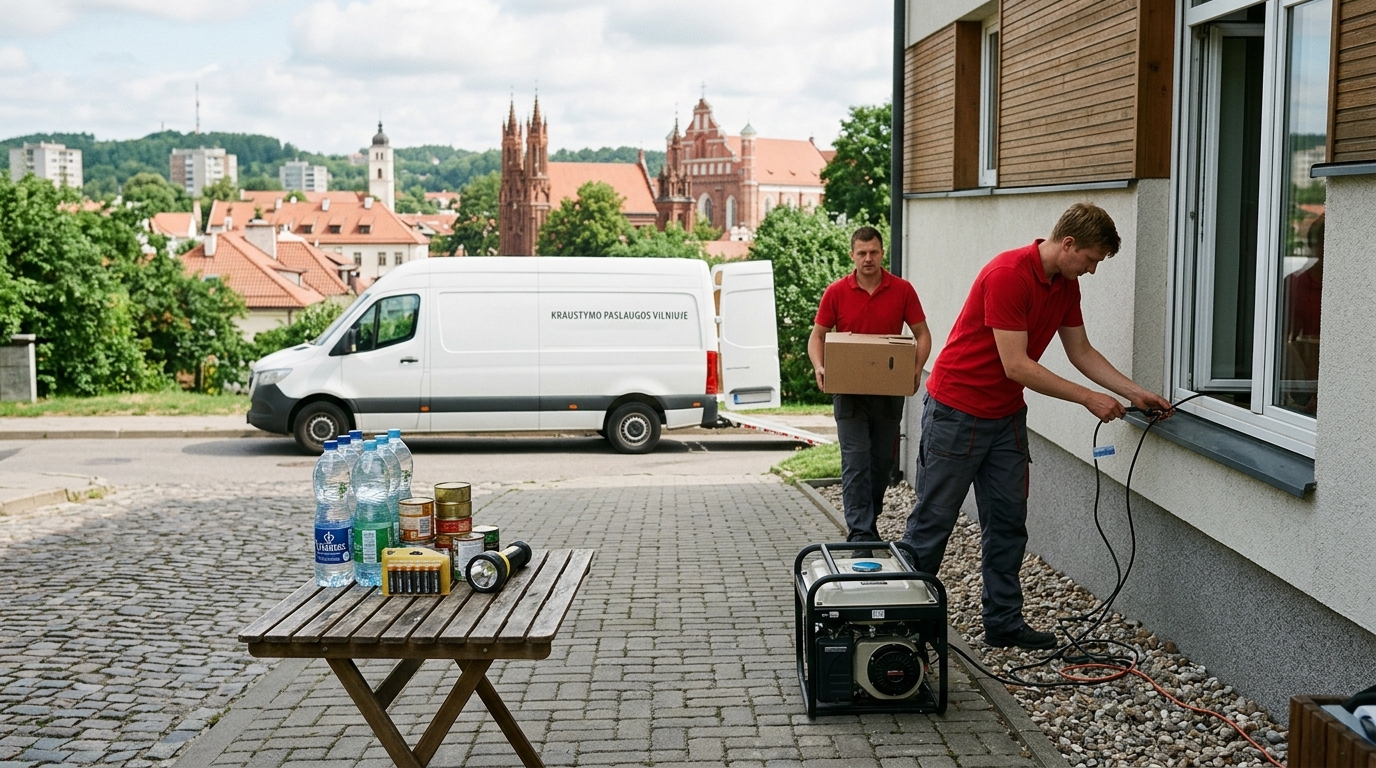
Heating and Water Without Electricity
Most modern gas and solid fuel boilers are controlled electronically — without electricity, they won't ignite even if gas is available. Similarly, well or borehole pumps: without power, there simply won't be water from the tap, even if the well is full.
Backup solutions worth having at home:
- A wood-burning stove or fireplace — works completely independently of the power grid.
- A gas heater with a cylinder — suitable for short-term heating of a single room.
- 20-30 litres of drinking water reserves per person for 3 days — stored in sealed containers, in a cool place.
If you have a well, consider a hand-operated pump as a backup — it costs around €100-200 and works without any electricity at all.
Emergency Plan for Homes: Checklist
Before storm season begins, it's worth having a minimal kit ready: a torch with spare batteries, a power bank for your phone, a battery-powered radio, matches, a canned food supply for several days, and a first aid kit.
ESO announces planned restoration timelines via its website and SMS messages to registered subscribers — it's worth checking whether your phone number is linked to your home address in the system. This lets you plan whether you'll need a generator for one day or five.
During a long power outage, communication with neighbours becomes important — one generator is often enough to keep several households' fridges running in rotation, and information about repair progress spreads faster through the community than through official channels.
When the Power Goes Out Right on Moving Day
Before planning your moving date, it's worth checking the weather forecast at least 3-4 days ahead — strong winds or heavy rain increase the risk that darkness will greet you at your new home. If you already know a storm is approaching, the article on how to protect your move from storm damage will help you plan your actions in advance.
If there's no electricity on the day of your move, first check whether the water supply works and whether at least minimal lighting is ready — torches, candles. Furniture assembly and organising will have to wait, but unloading boxes and separating the most important items (documents, medications, clothing) can still be done without electricity.
If the house is still unready, or you're waiting for electricity and heating to be restored, it's wiser to temporarily leave some furniture and belongings in storage rather than moving everything into a house without power and heating all at once. This protects your furniture from moisture and lets you settle in without pressure.
Practical Takeaways for Those Moving to Vilnius District
Before buying a house in Vilnius district, it's worth asking neighbours or the previous owner how often and for how long the power goes out there — this is just as important as the condition of the heating system. In garden communities and more remote streets, the infrastructure is often older, and the repair queue is longer.
We've moved more than 9,500 clients over 12 years, and we know that plans change due to weather more often than anyone would like. If a force majeure situation forces a change of moving date or route, an experienced team can quickly replan the work, rather than leaving you with a full truck outside a house with no power. When choosing a service provider, it's worth knowing how to identify a reliable moving team that can adapt to such situations.
If a storm has already devastated your home right before your move, it's worth reviewing what to do if a storm has already hit your home — this will help you avoid additional damage to furniture and appliances.
Frequently Asked Questions
How long does a fridge keep food cold without electricity?
A closed fridge maintains a safe temperature for about 4 hours. A full freezer lasts up to 48 hours, a half-empty one about 24 hours. Frequently opening the door significantly shortens this time.
What generator power do I need for a private house?
1-2 kW is enough for a fridge and lighting. If you also want to run a water pump from a well, choose a 3-3.5 kW generator, since the pump requires more power at startup than during normal operation.
Can a generator be placed in a garage or basement?
No. A generator should always be placed outdoors, at least 3-5 metres away from windows and doors, because exhaust fumes build up carbon monoxide, which has no smell and can cause fatal poisoning in an enclosed space.
Why does power restoration take longer in the suburbs than in the city?
ESO's priority is to restore power where the largest number of people are affected and where critical infrastructure is involved. Garden communities and more remote settlements with fewer subscribers end up lower in the repair queue, even if the cause of the fault is simple, such as a fallen tree.
What should I do if the power goes out on moving day?
Check whether the water supply works, prepare torches, and separate your most important items — documents, medications, clothing. If the house remains unready for a longer period, it's worth temporarily leaving some furniture in storage until electricity and heating are restored.
If you're planning a move and want a team that can adapt to weather or power disruptions, calculate your moving cost in advance or book a moving service right away at a convenient time.