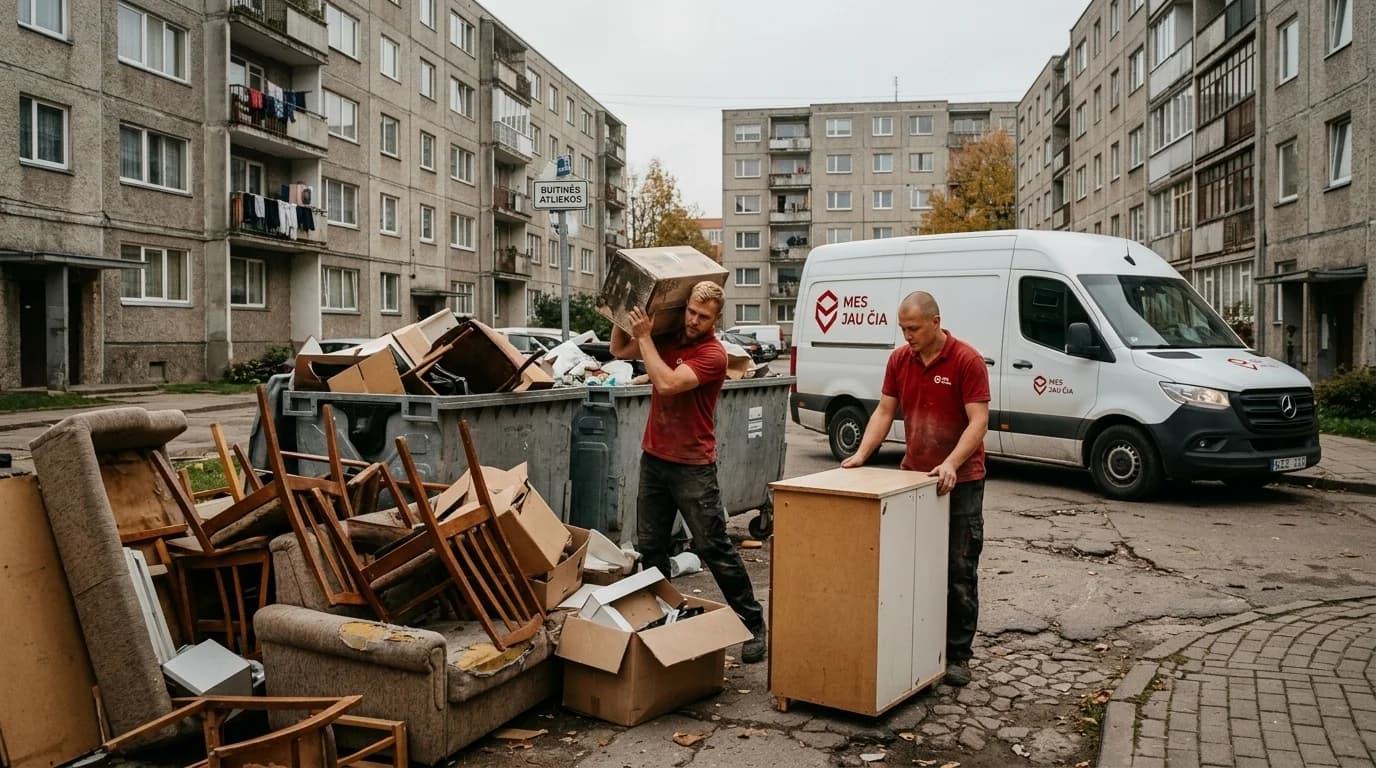
The waste management crisis currently building up in Vilnius comes down to one simple thing: getting rid of bulky items has become harder and riskier than it was a month ago. If you're planning to move house in the near future, you can no longer just leave old furniture or appliances next to the bins – the municipality is currently tightening controls, and processing capacity has dropped. In this article, we cover what to do with your belongings while the system is overloaded, and how to plan your move so you don't end up with a fine or a mountain of boxes in your flat.
In brief:
- The Vilnius region generates around 700 tonnes of waste per day, and the sorting plant is still not operating at full capacity following a fire.
- Moving house generates a lot of bulky waste – old furniture, boxes, household appliances – which is now harder to dispose of through the municipal system.
- Leaving items next to bins or in public spaces can result in an administrative fine – enforcement has been stepped up.
- The safest option is pre-planned, documented waste removal carried out alongside your move.
What's happening with Vilnius's waste management system
The crisis began last year, when a fire broke out at the Vilnius waste sorting plant. Operations still haven't been fully restored, and the Vilnius cogeneration plant has additionally reduced the volume of waste it incinerates. Adding to this, the Vilnius County Waste Management Centre (VAATC) and the company Energesman are in a dispute over their contract – VAATC terminated it on 10 July, the court did not impose interim measures, and the 20-working-day deadline given to Energesman to correct the violations expires on 7 August.
Meanwhile, law enforcement has launched a pre-trial investigation into a possible breach of environmental protection rules at the plant. VAATC has already signed contracts with Ecoservice and Ekonovus, and Ekobazė will also begin handling waste. The system is functioning, but disruptions are inevitable – as reported by this source, which noted that the Vilnius region produces around 700 tonnes of waste per day.
700 tonnes is roughly equivalent to 140 full bin lorries a day. When one link in the waste management chain breaks down, the impact is felt quickly – and not just by politicians or businesses, but by anyone that week trying to get rid of an old wardrobe or a broken fridge.
How the crisis affects people moving house and new residents
Moving house almost always leaves behind a pile of waste: old furniture that doesn't fit in the new flat, flattened boxes, appliances that no longer work. Normally, this is handled through municipal collection schedules or bulky waste collection points. Now, with the system experiencing disruptions, bins are filling up faster and schedules are running late.
In practice, this means the items you planned to throw out on moving day might simply have nowhere to go. The most common mistake we see among clients is leaving waste disposal until the last day, hoping it will "somehow sort itself out". During a crisis, that plan no longer works.
When the bin is full and there's nowhere to take your items, it's tempting to just leave them nearby – next to the building, by the collection point, on the pavement. This is exactly where the second problem begins.
Legal and practical risks: why you shouldn't just dump items "wherever"
With an investigation underway into possible environmental violations within the system itself, the municipality and regulatory authorities are currently monitoring street-level waste disposal more closely. This means more inspections and less tolerance for items left without authorisation.
Individuals who dispose of waste improperly or leave it in public spaces face an administrative fine – depending on the violation, this can range from a few dozen to several hundred euros. The municipality may also require the person responsible to clean up the area at their own expense, if identified.
This is why a legal, documented disposal method is no longer just a formality – it's protection against unpleasant consequences. Services that issue disposal confirmation allow you to prove that items were dealt with in line with requirements, rather than simply dumped somewhere.
What to do with old belongings when moving house right now
The first step is to arrange waste removal before booking your moving date, not after. Making a call or enquiry a week in advance is enough to secure a guaranteed solution, rather than scrambling at the last minute to find someone to take away a broken wardrobe.
Second – sort by category, since different types of waste are handled differently:
- Furniture and upholstered items – old furniture removal service.
- Fridges, washing machines, and other household appliances – household appliance disposal, as such appliances must be handed over for specialised recycling.
- Rubble, tiles, and building materials after renovation – construction waste removal, as this can never be disposed of together with household waste, crisis or no crisis.
- Anything else bulky that doesn't fit in a standard bin – bulky waste removal.
Third – when municipal collection points are overloaded or schedules are delayed, it's worth choosing a professional disposal service rather than waiting for the system to recover. It costs money, but it guarantees that your items will be gone from your flat on the day you need them to be, not whenever suits the municipality.
A chance to reassess your belongings: minimalism before moving
The crisis is an unwelcome but useful reminder to reconsider what's actually worth bringing to your new home. Every piece of furniture or box you decide to leave behind now is one less problem on moving day.
It's easier to decide what to keep, give away, or dispose of in advance, calmly, rather than on the last night before the movers arrive. A practical rule of thumb: if you haven't used an item in 12 months and it holds no sentimental value, it probably isn't worth the space in your new flat. You'll find a more detailed method in our article on minimalism before moving house.
Fewer belongings also bring a concrete financial benefit – a shorter loading time, fewer hours needed, and a cheaper bill. When a move is billed by the hour, every wardrobe you let go of saves real money.
How professionals help you avoid the consequences of the rubbish crisis
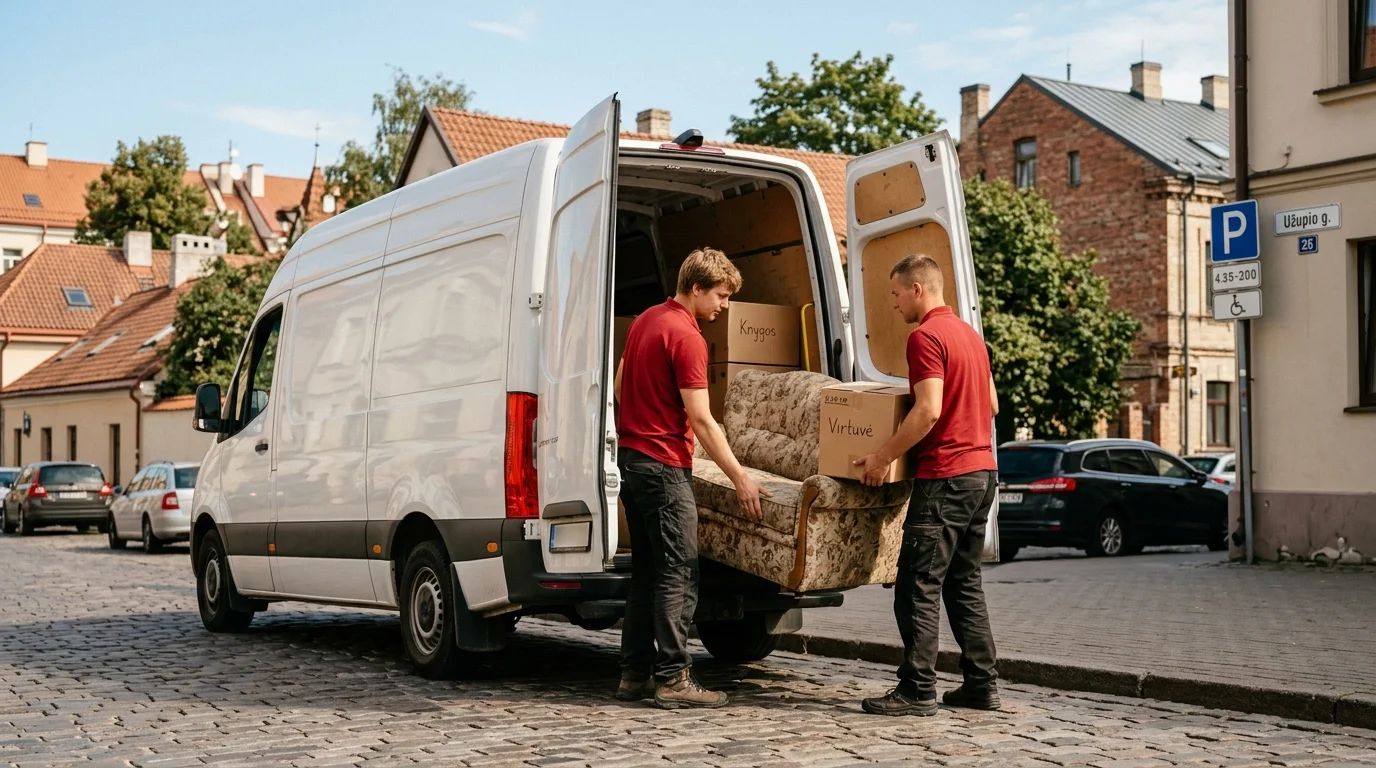
Over 12 years in the market, we've carried out more than 9,500 house moves and have seen plenty of situations where a client is left with a pile of belongings the municipality doesn't remove straight away. That's why our team includes waste disposal as a separate but coordinated service – we remove and dispose of old furniture, household appliances, or construction waste legally, with confirmation provided.
For the client, this means one simple thing: no need to worry about where to put unwanted items when the bins in the yard are full. Moving day ends with an empty old flat, not a pile of abandoned boxes by the stairwell.
| Service | Price |
|---|---|
| 2 movers + van | €65/hour (excl. VAT) |
| Additional mover | +€30/hour |
| Minimum order | 2 hours, from €130 |
| Evenings and weekends | ×1.5 base rate |
All services are 100% insured, and the team works 24/7 – which matters especially right now, when the municipal system is overloaded and it's unclear when schedules will return to normal. If you're moving an entire flat's worth of belongings, it's most convenient to go straight for the flat moving service, which includes waste removal as an add-on option.
Practical checklist for anyone moving house during the crisis
- Contact a disposal service at least a week before your planned moving date, not on the last day.
- Sort your items by category in advance – furniture, appliances, and construction waste are all handled differently.
- Never leave items next to bins or collection points "in case someone takes them" – you risk a fine.
- Before setting a date, check the municipality's bulky waste collection schedule – it may currently have changed.
- Plan your move and waste removal as a single process, not two separate concerns.
- Check a preliminary price in advance using the price calculator, so there are no surprises on your bill.
Frequently asked questions
Can I just leave old furniture next to the bin while the rubbish crisis continues?
No, this is considered a violation and can result in an administrative fine, regardless of whether the bin is full. During the crisis, the municipality has only stepped up enforcement, not relaxed it. The safest option is to arrange documented bulky waste removal.
How much does it cost to dispose of old furniture or household appliances when moving?
The price depends on the quantity and type of items, but it's usually arranged together with your moving order and calculated by the hour – from €65/hour with two movers. You'll get an exact figure most quickly by submitting an enquiry with a list of your items.
Can household appliances and construction waste be disposed of together with furniture?
No, each category follows a different disposal process. Household appliances are handed over for specialised recycling, construction waste is handled separately from household waste, and furniture goes into a different waste stream. If you mix everything together, you risk the service refusing to take the pile at all.
How long does bulky waste removal through the municipality currently take?
At the moment, timeframes may stretch out longer than usual due to reduced plant capacity and changes among contractors. The municipality does not publicly guarantee a specific deadline, so it's worth having a faster alternative in place when planning your move.
Is it worth hiring a private company if the municipal service is free?
If you have enough time and your schedule allows for waiting, the municipal system will do the job. However, on moving day, when you need to clear a flat within a few hours, a private service with a guaranteed timeframe is often the only realistic option.
If you're planning to move house in the near future and want to sort out both your furniture and your waste in one go, submit an enquiry through our order form with a preliminary price – we'll respond within one working day and suggest a date that works even during the crisis.