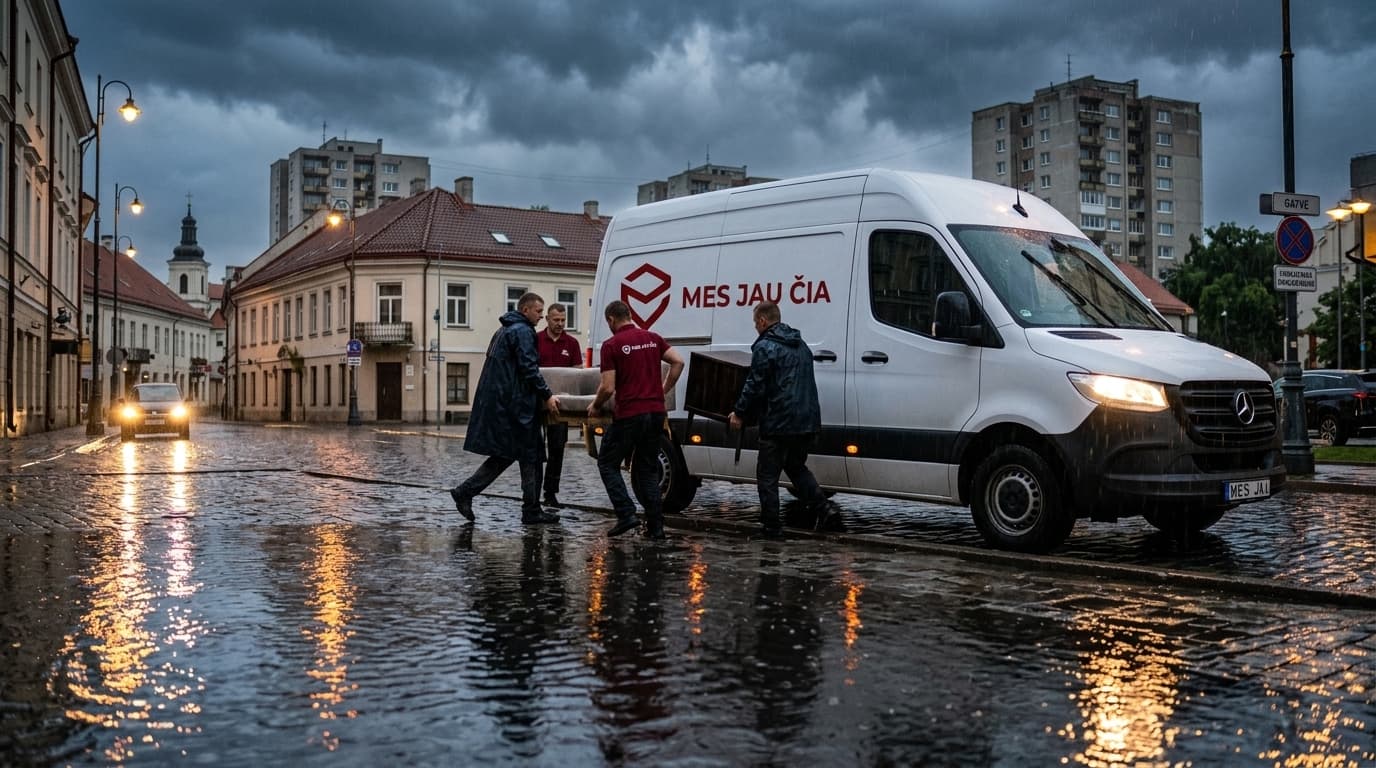
The storm that swept through Vilnius and Vilnius district on Saturday night flooded the Bukiškis viaduct in Avižieniai, and traffic there wasn't restored until late Sunday evening. If you had planned a move through this area that weekend, you probably had to change your route or wait for several hours. Events like this are a great reason to look at how weather risk affects moving logistics and what to do so a storm doesn't ruin your day.
In brief:
- A storm flooded the Bukiškis viaduct and several areas of Vilnius — traffic was restored after almost a full day of work.
- The riskiest zones during heavy rain: the Western bypass, Geležinio Vilko Street, Žalgirio Street, Justiniškių Street, and the Avižieniai and Riešė surroundings.
- It's worth checking the weather forecast 2–3 days before a move and leaving a time buffer between tasks.
- A professional team with a van (from €65/hour) can adjust the route in real time — something that isn't possible when moving on your own.
What happened: the Bukiškis viaduct and the storm in Vilnius district
On Saturday evening, around 35 litres of water per square metre fell across the Vilnius region in a short period of time. The Avižieniai and Riešė elderships were hit hardest — roads and garages were flooded, many trees were snapped, and house roofs were damaged. The Bukiškis viaduct turned into a pond, and road maintenance crews worked continuously from 11pm on Saturday until late Sunday evening to lower the accumulated water level and reopen the road, according to this source.
Firefighters responded to fallen trees 37 times overnight, most of them in Vilnius district. Around 900 residents were left without electricity. For drivers, this meant traffic jams and detours, but the exact same problem arises for anyone who had planned to move that weekend — a van full of furniture can't wait patiently at the edge of the road the way an ordinary car can.
How extreme weather can disrupt moving logistics
A flooded road is only one problem. It's often compounded by fallen trees, a loss of power in the building (meaning the lift stops working), slippery stairs, and wet ramps. All of this genuinely slows down the work, even once the team has already arrived on site.
In practice we see three typical consequences: movers are delayed because they're stuck in traffic or taking a detour; clients cancel the booking themselves at the last minute, worried about their furniture; and jobs take longer because extra time is needed to pack items against moisture or to wait out a downpour.
Longer working hours and evening timeslots can also affect the final price — if the move is pushed into the evening or the weekend, a ×1.5 rate applies. So weather risk isn't just an inconvenience, but also a financial matter worth considering in advance.
The riskiest areas of Vilnius during heavy rain
According to data from the latest storm, the worst flooding in Vilnius was recorded in the following locations:
- The Western bypass
- Geležinio Vilko Street
- Žalgirio Street
- Dangeručio, Mozūriškių, Vėtrungių, Justiniškių and Leičių streets
- The Avižieniai and Riešė elderships in Vilnius district
If you're moving from or to these areas, it's worth knowing your route in advance and having at least one alternative way to get there. This is especially relevant for those choosing moving services in Vilnius from the suburbs — there the road network is sparser and there are fewer options for detours. Before setting off, an experienced team always checks the traffic situation and, if necessary, adjusts the route before the furniture is even loaded.
How to plan a move around the weather forecast
Three simple steps reduce the risk to a minimum:
- Check the weather forecast 2–3 days before the move date, not just the day before.
- Leave a time buffer between moving out and moving in — at least 1–2 hours of buffer if you're planning both on the same day.
- Choose a team that can flexibly change the time or route if the forecast suddenly worsens.
Before settling on a date, it's useful to calculate the cost of your move in advance — this way you'll see the real budget and can more easily decide whether it's worth postponing the move by a day if forecasters are predicting a storm.
Alternative routes and logistics solutions in the event of a storm
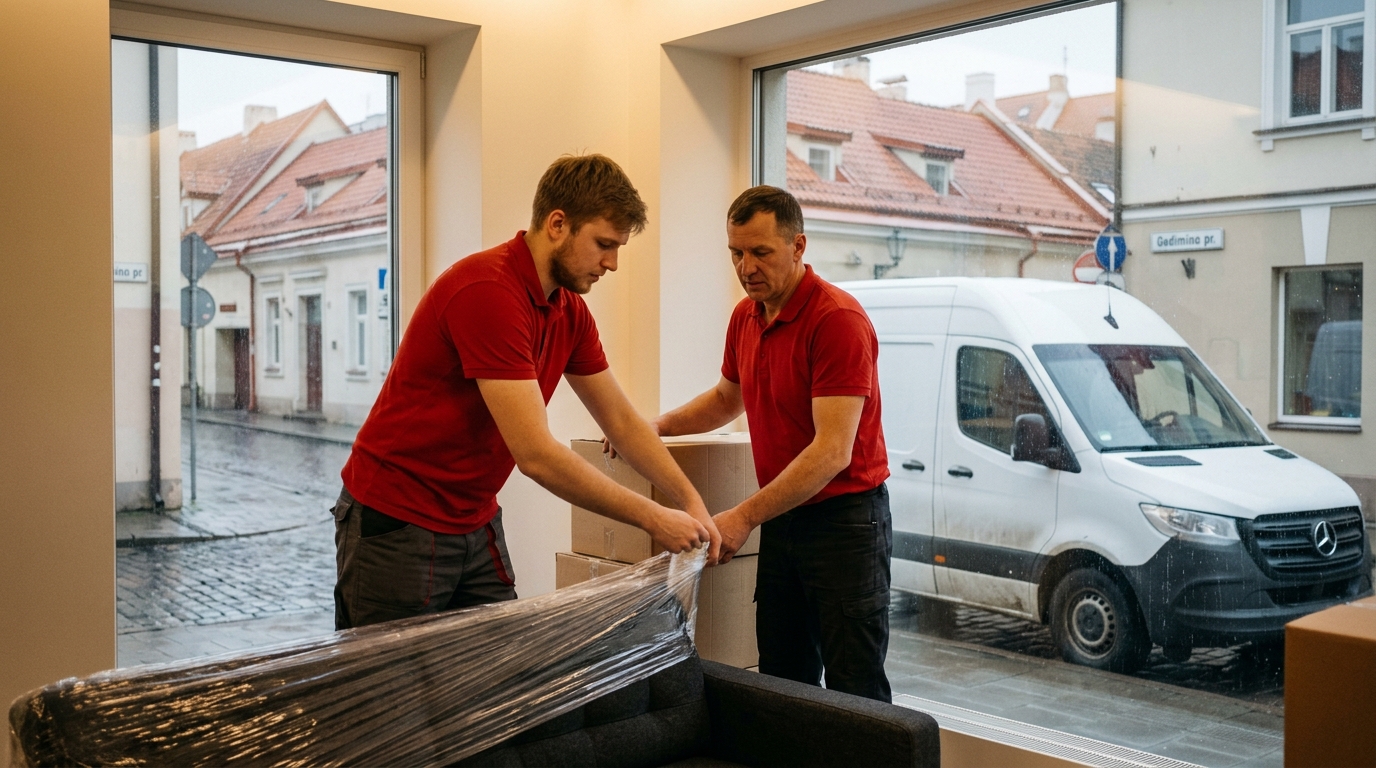
On a stormy day, a professional team doesn't sit around waiting for the weather to improve — it adjusts the route in real time, following traffic reports and information from road services. This means less downtime and a lower chance that furniture gets soaked in a car stuck in traffic.
Two movers with a van at €65/hour (excl. VAT) is a more flexible solution than moving on your own with the help of friends — if the road is flooded, the team can quickly change route or temporarily pause work until the most dangerous phase of the downpour passes. If time is tight because of a weather threat, it's worth choosing an additional team of movers (+€30/hour) — faster loading means less time spent outside in the rain.
What to do if a downpour or storm starts on moving day
If heavy rain starts right on moving day, the most important thing is to protect your belongings from moisture. Simple solutions help:
- Wrap furniture and boxes in stretch film or cover them with a tarpaulin before carrying them outside.
- Keep electronics boxes last in line for the van, so they spend as little time as possible outside.
- If the rain is particularly heavy, it's safer to postpone the move by 1–2 hours than to risk furniture on a wet ramp.
If it turns out that the planned route is flooded — as happened with the Bukiškis viaduct — it's worth informing the moving team immediately so they can look for a detour, rather than waiting by a flooded street for half a day.
How to protect belongings from water and moisture during transport
It's worth packing electronics into sealed bags with a moisture absorber (such as silica gel packets), and keeping documents in a separate plastic folder rather than a cardboard box. Furniture with a wood finish benefits from an additional protective covering rather than just cardboard — cardboard loses its shape within minutes once it gets wet.
Especially delicate or valuable items — a piano, artwork, antique furniture — are better entrusted to professionals straight away, since they have the right equipment and experience for handling such items in the rain. If your new home isn't ready to receive your belongings yet (for example, if renovation work was delayed due to storm damage), it's worth considering short-term storage for your items — this way you avoid rushing and the risk of leaving things outside temporarily.
When to choose a professional team instead of moving on your own
When people move themselves in bad weather, they usually risk two things: damaged furniture and injury on wet stairs or ramps. The most common mistake we see with clients who try to move on their own during heavy rain is that they don't factor in how long it will take to carry items back and forth multiple times through the rain, and the furniture ends up soaked by the second or third trip.
Over 12 years we've carried out more than 9,500 moves in all kinds of weather conditions, so we know how to act when the forecast suddenly changes. All our services are 100% insured — protection against unforeseen situations, which are more common during a storm than on an ordinary day. If you're not sure whether it's worth taking the risk yourself, read about how to recognise a reliable moving team before making your final decision.
Frequently asked questions
Can a move be cancelled or rescheduled due to bad weather without an extra charge?
Yes, if you report the weather risk in advance, it's usually possible to arrange a different date or time without an extra charge. It's best to get in touch as soon as you see the forecast worsening, rather than a few hours before the move.
How quickly can I get a price quote before a storm?
The online price calculator shows a preliminary amount within minutes, and you'll usually get an exact quote by phone within 10–15 minutes. This is handy when you need to decide quickly whether to move today or wait for the storm to pass.
Does the moving team work at night or on weekends if needed urgently?
Yes, we work around the clock, seven days a week, including nights and public holidays. A ×1.5 rate applies for evening and weekend hours, but this allows you to move even when a convenient weather window appears unexpectedly.
What happens if the planned route is flooded on moving day?
An experienced team monitors the traffic situation in real time and chooses an alternative route before the furniture is even loaded. If a road closes while the trip is already underway, the driver adjusts the route based on up-to-date information from road services.
If a move is coming up and the weather forecast doesn't look promising, it's better not to take the risk on your own — book your move with flexible timing or check the price in advance, and you'll find more useful information in our Vilnius moving tips section. For an urgent case, you can always get in touch about an urgent move or call +370 635 10000.