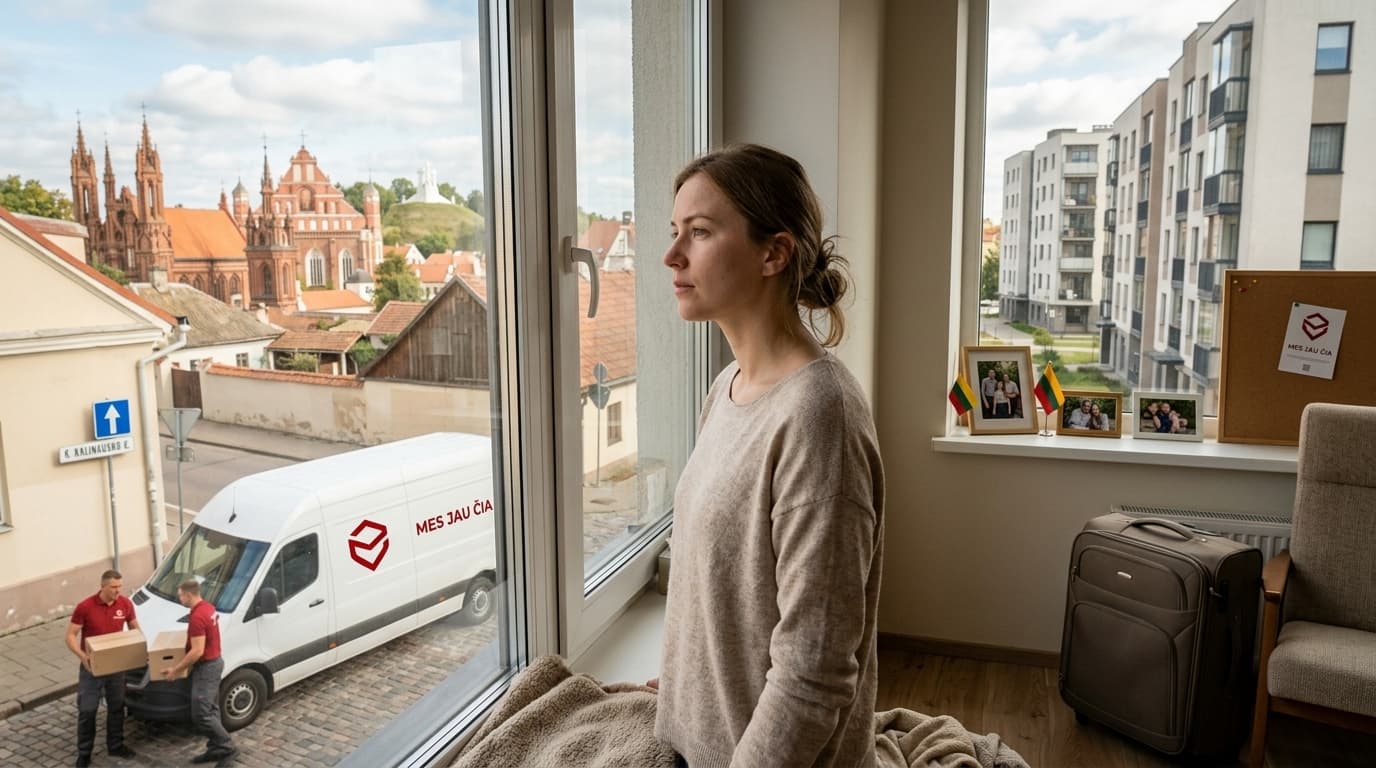
Prime Minister Mindaugas Sinkevičius and his family will continue living in their flat in Jonava. The residence in Turniškės is assigned to him by virtue of his office, but he's turning it down – meaning the State Security Department will have to rearrange its work schedules and travel to and from Vilnius more often. It's an unusual decision for a politician, but a perfectly understandable one for a person: most of us have, at some point, seriously considered moving to a better location and still chosen to stay where we already are.
In brief:
- The Prime Minister is choosing to stay in his flat in Jonava instead of the residence in Turniškės – the security service is adapting to him, not the other way round.
- The most common reason for not moving isn't finances, but an emotional attachment to the place, the neighbourhood, and habits.
- The costs, time and logistics of moving genuinely hold people back even when the new home is objectively better.
- The decision is best made based on specific needs, not on prestige or square footage.
The news that made us think: the Prime Minister chooses a flat, not a residence
Paulius Nemira, deputy director of the State Security Department, told 15min.lt that the department will have to organise security differently than in Turniškės – more trips out of Vilnius, different logistics, a different rhythm. But the department will adapt, because the Prime Minister is sticking with his decision.
This story is interesting not because of politics. It's interesting because it illustrates something simple: having the opportunity to move to a bigger, more prestigious, more convenient place doesn't necessarily mean you have to do it. Sooner or later, everyone finds themselves at a similar crossroads. You inherit a flat, get a better job offer in another city, your children outgrow their small room, and the same question keeps circling in your mind – move or stay?
What makes a person, given an alternative, still choose the status quo? The answer is rarely a rational calculation in square metres. More often, it's emotions, habits, and the fear of losing something that already works.
Emotional reasons for staying in your home
Attachment to a place forms over years, not over a single weekend. A neighbour who lends you a potato peeler, the corner shop where the assistant remembers your name, the bench in the courtyard where your kids played all summer – these are small things that together create the feeling of "this is home".
Children's schools often become the deciding argument. Moving a seventh-grader to a new school mid-year isn't just a logistical challenge, but also social stress for a child who already has a circle of friends and teachers they're used to. Adults are no less attached to their social network – the gym, the neighbourhood community, even the hairdresser they've been going to for five years.
Psychological comfort in a familiar environment often outweighs rational arguments in favour of moving. In a new place, everything has to start over – new routes, new people, a new routine. For the brain, this means an extra load that most people consciously avoid, even if the new place is objectively more convenient or larger.
Practical and logistical difficulties that discourage moving
In Sinkevičius's case, the security service itself admitted it would need to travel more and plan work differently. The same logic applies to every family: if the new home is further from work, school or the clinic, everyday comfort drops even when the home itself is better.
Distance is often an underestimated factor. An extra 20–30 minutes on the road every day adds up over a year to hundreds of hours spent in a car or bus instead of at home.
The second obstacle is the cost and time of the move itself. People tend to mentally calculate only the difference in rent or mortgage, forgetting that moving is a separate project with its own budget and logistics. If you choose a professional team, it's worth calculating the moving cost in advance so there are fewer surprises.
Third – the burden of maintaining a larger property. A house with a garden sounds lovely until you have to heat it in winter, mow the lawn in summer, and repair the roof every five years. "More" doesn't always mean "better" – sometimes it just means more work and more bills.
| Criterion | Flat | House |
|---|---|---|
| Maintenance time | Minimal, often covered by the building association | Garden, roof, façade – constant work |
| Monthly expenses | More fixed, fewer surprises | Variable, depends on the age of the house |
| Community | Neighbours through the wall, quick social connection | Often takes time to get to know the area |
| Room for growth | Limited | Larger, but requires investment |
When it's worth seriously considering moving – and when it isn't
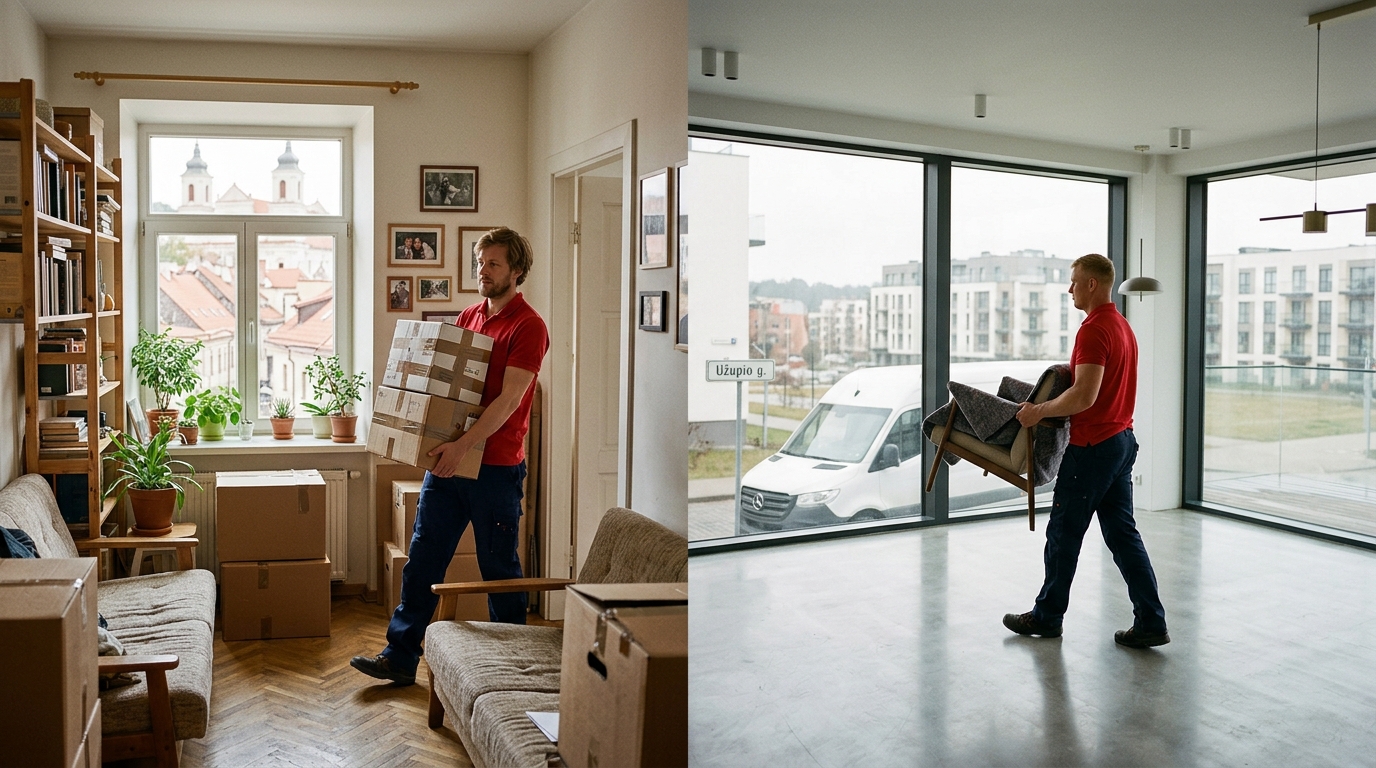
There are specific signs that your current home no longer meets your needs: the family has grown, there aren't enough rooms, the commute to work takes more than an hour each way, or the building is simply physically worn out and repairs would cost more than moving.
On the other hand, if the main reason for wanting to move is just greater prestige or a desire to "finally own a house", without any concrete practical benefit, it's worth pausing. Emotional attachment can hinder rational decision-making in both directions: preventing a necessary move, and pushing for a move when the real reason is simply fatigue with routine.
There's also a middle path. You don't always have to choose between "everything stays" and "everything changes". Partial relocation – where only some of your belongings are moved, while the rest are temporarily kept in storage – lets you try out a new place without risking everything at once. Storing your belongings becomes especially useful during a transitional period, when a final decision hasn't yet been made.
If you've still decided to move: how to reduce stress
Choosing a reliable team is half the battle. It's worth reading in advance how to choose a reliable moving service provider, because the market has no shortage of companies without insurance or clear pricing. In our experience, the most common mistake we see among clients is agreeing to a verbal quote over the phone, only to find the final bill doubles because of "extra" work that was actually a standard part of the service.
Before signing a contract, it's useful to check how to tell a reliable moving team apart from one that just makes promises. Reviews, insurance, a clear hourly rate – three things you need to verify before you even call.
Before packing the boxes, it's worth reviewing the principles of minimalism before moving – it often turns out that a third of the items in your wardrobe or storage room haven't been used in ages. Only take with you into your new life what you've actually used in the past 12 months.
If you're moving from city to city or just to a different district, plan the logistics in advance – book your team at least a week before the date, discuss whether you'll need crane (external hoist) services if furniture won't fit through the stairwell, and clarify whether you'll need interim storage. Before you start, it's handy to read moving tips and common mistakes – most of them recur from case to case.
Practical tips for those who are staying put but want change
The solution isn't always to move. Sometimes it's enough to refresh the space you already have. Getting rid of old, worn-out furniture and creating a new layout can give you the same "fresh start" feeling without all the stress of moving.
Disposing of unwanted items is a kind of "small move" in place. The old furniture removal service lets you clear out what's accumulated over the years in a single day and free up space for new solutions – without going anywhere.
In some cases, it's worth hiring professionals even if you're not moving at all. Shifting a heavy wardrobe, moving a piano into another room, assembling furniture after a shop purchase – such tasks often end in a hurt back or scratched floors if attempted alone. In that case, it's worth checking out flat moving services – they often include local furniture shifting too, not just a full move-out.
Frequently Asked Questions
Why do people choose not to move, even when they have the opportunity?
The most common reason is emotional attachment to a place: the neighbourhood, children's schools, social ties, and psychological comfort in a familiar environment. Practical factors – distance to work, moving costs, and time – also often outweigh the advantages of a new home.
How do you know whether it's worth moving or better to stay?
It's worth seriously considering a move if your current home no longer meets your needs – there's not enough space, the commute takes too long, or repairs would cost more than a new home. If your main motivation is simply prestige, it's worth pausing and assessing the real benefit.
How much does moving a flat cost in Lithuania?
The standard rate is two movers with a van for €65/hour excluding VAT, with a minimum order of 2 hours, meaning from €130. An additional mover costs +€30/hour, and a 1.5x rate applies in the evenings and on weekends.
Can you move in stages, without relocating all at once?
Yes, this is called a partial move – some belongings are moved out straight away, while the rest are temporarily kept in storage. This solution is convenient when you want to try out a new place before making a final decision, or when there's a time gap between homes.
When is it worth hiring a moving team even without relocating to a new home?
If you need to shift heavy furniture, assemble new purchases, or move items to another floor, a professional team protects both you and your interior from damage. This is especially relevant for pianos, wardrobes, or appliances that can't safely be moved by one person alone.
If you've already decided to move, or simply want to know how much it would cost – fill out the order form and you'll receive a specific quote within a few hours.